



Outback Mum Angie Nisbet wins Queensland AgriFutures Rural Women’s Award
 CHICKEN MEAT / Monday, 9 February 2026
Stronger control, lower costs — bringing commercial biopesticide for lesser mealworm within reach
Share
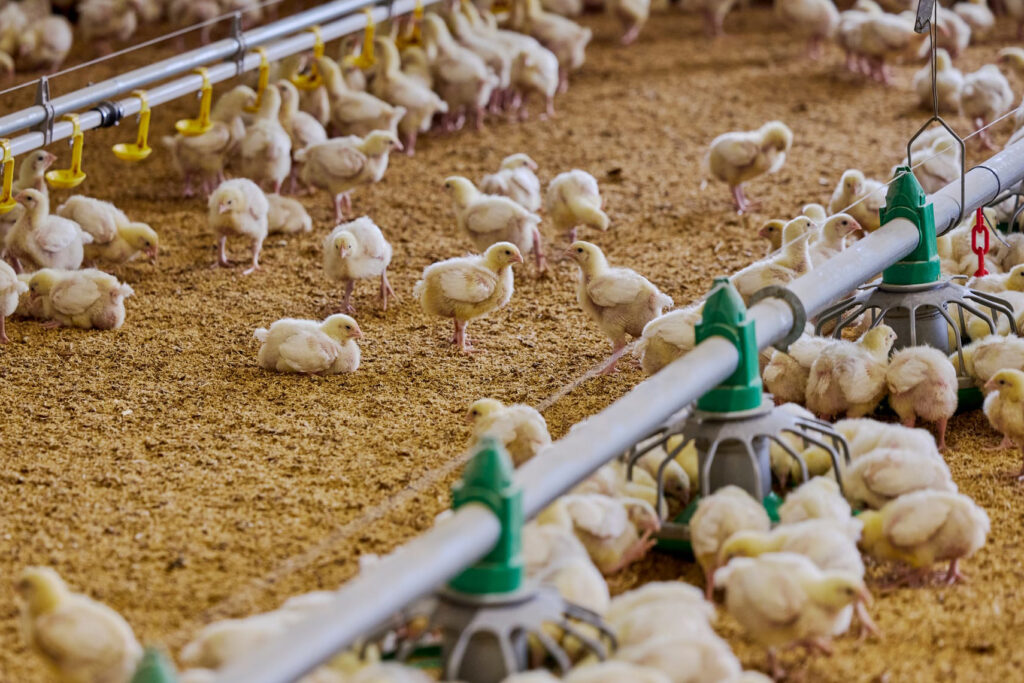
Lesser mealworm – also known as darkling or litterbeetle – is one of the most persistent and damaging pests in Australian chicken meat production. Increasing insecticide resistance and limited control options has made lesser mealworm difficult and expensive to control, prompting the search for new solutions.
Research funded by AgriFutures Chicken Meat Program has identified a biopesticide that has delivered promising results that could transform the way the chicken meat industry manages this persistent pest. Led by the Queensland Department of Primary Industries (DPI), the research found that mycopesticides – biopesticides containing the insect pathogenic fungus Beauveria bassiana – provide a safer, effective and more sustainable alternative to traditional chemical insecticides.
The beetle, occurring in bedding litter, can harbour and spread harmful pathogens such as Salmonella and Escherichia coli, and its burrowing behaviour causes extensive damage to shed flooring and insulation. Traditional control has relied on spraying chemical insecticides onto the floors and walls of chicken sheds in between flocks, but growing resistance issues and a reduction in effective chemical options has made management increasingly difficult.
“There are only a few control insecticides left for producers to use and they are becoming less effective,” said lead researcher Steven Rice, Principal Technical Officer, Queensland DPI.
“That’s why we needed to explore alternatives.”
B. bassiana naturally infects and kills insects, including lesser mealworm. It is already found in chicken shed environments, is safe to birds and mammals, and does not promote chemical insecticide resistance. But despite its strong potential as a biopesticide, key data gaps – particularly around safety, metabolite levels, product stability and regulatory requirements – have slowed commercial investment.
Building the data needed for commercialisation
At the project’s outset, the Australian Pesticides and Veterinary Medicines Authority (APVMA) assessed previously completed research to determine what additional data was needed for the mycopesticide to be registered in Australia.
The research team explored the safety of secondary fungal metabolites, undertook detailed genomic analyses of the B. bassiana strain, and examined the shelf life of potential mycopesticide formulations. They also worked to increase yield, while refining and reducing the cost of fungal production, ensuring the technology could be commercially scalable. Finally, extensive on-farm trials were undertaken, comparing the performance of the mycopesticide against standard insecticides commonly used by producers.
Key findings — safe, stable and highly effective
Laboratory studies confirmed that B. bassiana produces important secondary metabolites — oosporein and beauvericin — in quantities well below thresholds of concern for poultry or human health.
“Safety is a top priority. The low metabolite levels give us confidence that the mycopesticide can be safely used in commercial chicken sheds,” said Steven.
Genomic analyses of 20 samples of the B. bassiana strain found the strain used in the mycopesticide is genetically distinct from strains already present in commercial fungal products.
“This uniqueness of the strain strengthens the commercial value of the mycopesticide and separates it from other commercial products,” Steven said.
The study also confirmed strong product stability, with granular formulations remaining viable and effective against lesser mealworm for 14 months after storage in hot and humid conditions — stored at 300C and up to 75 percent humidity.
“This level of stability is a major breakthrough, indicating the shelf life is suitable for global poultry operations and they are competitive with established lesser mealworm control products,” Steven emphasised.
“Optimised production methods also resulted in an 80% reduction in consumable costs and a 66% increase in fungal yield, improving the commercial feasibility of large-scale manufacturing.
“If this is going to succeed commercially, its production must be affordable, and we’ve shown it can be.”
The project’s field trials showed that using 10% less fungus than previous trials reduced lesser mealworm populations by 87%, outperforming the industry-standard chemical insecticides, which achieved only 62% control.
“The mycopesticide has consistently outperformed the industry insecticides across all our field trials, and doing so as a natural option,” Steven explained.
Potential impacts for the chicken meat industry
The results demonstrate not only the efficacy of the biopesticide but also its potential role in slowing resistance development and reducing chemical residues in litter.
Additionally, producers will see reduced structural damage from beetle tunnelling and lower pathogen transmission risks. Consumer confidence in the sustainability of the chicken meat industry will also strengthen.
“The industry is looking for tools that are both effective and sustainable,” Steven said. “Mycopesticides have the potential to become a core part of integrated pest management in chicken production, not only in Australia but globally.
“The Australian chicken meat industry is now a step closer to the introduction of a safe, effective and sustainable mycopesticide for controlling one of the chicken industry’s most persistent pests.”
With strong performance in field trials, robust safety indicators and improved commercial viability, the foundations are set for the next phase of industry partnership and product registration.
“We have strong scientific data but commercialisation needs further investment,” Steven stressed.
“With this data, we’re in a much stronger position to bring partners on board.”
AgriFutures and Queensland DPI are undertaking an Expression of Interest process to identify a commercial partner to deliver the mycopesticide.
View the funding opportunity on the growAG website
Steven Rice will be pitching this opportunity at at the Ideas to Impact: Pitches for collaboration session, evokeAG, 2pm on 18 Feb 2026.
Latest News
-
Outback Mum Angie Nisbet wins Queensland AgriFutures Rural Women’s Award WORKFORCE AND LEADERSHIP / 09.02.26
 -
Virus transmission put under the microscope to improve beekeepers’ access to oversees genetics
HONEY BEE & POLLINATION / 09.02.26 -
Industry’s unsung heroes recognised as ATIEA shortlist revealed
THOROUGHBRED HORSES / 09.02.26 -
From fisheries to future industries: Meet AgriFutures’ new Senior Manager, Emerging Industries EMERGING INDUSTRIES / 09.02.26