



Regional space pioneer Angela Teale wins 2026 Western Australia AgriFutures Rural Women’s Award
 TRUFFLES / Tuesday, 2 December 2025
Unearthing a quiet giant: Australia’s rising truffle industry
Share
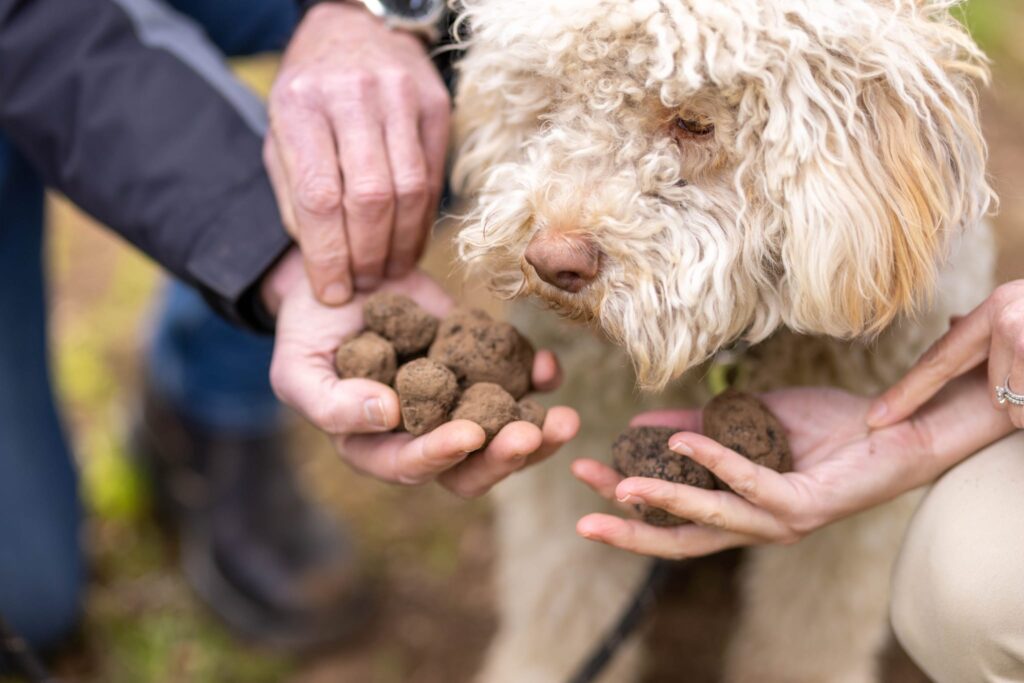
Beneath the shaded canopies of French and English oak trees across Australia, a quiet transformation is underway. Once the exclusive domain of European cuisine and centuries-old traditions, truffles are now firmly rooted in Australian soil. Literally and figuratively. In just over two decades, Australia has grown into the fourth-largest truffle producer in the world, exporting to more than 60 countries and earning a global reputation for exceptional quality.
What began as a romantic curiosity for many early growers has matured into one of the nation’s most promising emerging industries, driven by innovation, collaboration and a growing appetite for one of the world’s most enigmatic foods.
The allure of a hidden treasure
For many growers, the truffle journey begins with a moment of enchantment. That was certainly the case for Tony and Jane Groves of Flinders Truffles on Victoria’s Mornington Peninsula. The pair were living busy corporate lives, Tony in car dealerships and Jane in interior design, before a simple meal changed everything.
“We googled what we’d eaten that day because I said it was amazing,” Jane recalls.
“I think we were lured into the romance of the truffles as well, just like everyone else.”
That romance soon became reality. On their farm, 1,300 oak trees now produce an annual harvest of fragrant black truffles, sniffed out by their two dogs, Lucy and Enzo. Despite being only in their third year of commercial production, the couple harvested around 150 kilograms in 2024, with expectations to double that next season.
Their growth reflects the broader trajectory of the industry, with demand coming from local chefs, farm-gate customers and a thriving export market.
“About 50 kilos went overseas to Italy, France, Hong Kong, Vietnam, Tokyo, Dubai, India and Korea,” Tony explains.
A global powerhouse from the southern hemisphere
Australia’s rise as a truffle producer has been both rapid and remarkable.
“We’re on a very steady upward trajectory,” says Noel Fitzpatrick, Vice President of the Australian Truffle Industry Association.
“It won’t be too long before we… are producing more than Italy.”
The majority of Australian truffles come from Western Australia’s Manjimup region, south of Perth, famed for producing more truffle per hectare than anywhere else in the world. High yields, consistent quality and strong industry collaboration have cemented its place at the forefront of global production.
Stone Barn Truffles, a major industry player in Manjimup, produces around 1.5 tonnes per season from its 2,000 mature trees. Owner and developer Dion Rangè never set out to be a truffle grower.
“I just fell in love with this area,” he says.
A chance introduction to truffle pioneer Professor Nick Malajczuk set him on a new path.
“Glass of wine, good lunch, handshake and the rest is history.”
Stone Barn’s dogs Hazel, Billy and the sometimes-distracted Dougie work tirelessly each winter to uncover the valuable fungi. General Manager Damon Boorman says the farm’s focus on soil health and tree happiness underpins their success.
“A happy tree… is producing more sugars which allows the mycelium to thrive even more and then form into the fruiting bodies.”
Their philosophy stands in contrast to traditional European methods that rely on stressing trees.
“That just goes against nature,” Dion adds.
“A happy tree is a productive tree.”
A booming export opportunity
Around 90% of Australian truffles are exported, feeding northern hemisphere markets during their summer, their off-season for fresh truffle supply. This seasonal advantage has helped Australia secure strong footholds in the US, Asia and Europe.
“There are many other markets in the world that would take Australian truffles,” Damon explains.
“We’re just not producing enough as an industry yet… but the market is there to take it.”
Even large agricultural investors are taking notice. Mining magnate Gina Rinehart has reportedly planted around 20,000 oak and hazel trees in WA, signalling major confidence in the sector’s future.
Growing the industry—together
Despite its success, the truffle industry remains young and with that comes growing pains. A key challenge is inconsistent grading and export standards, particularly as new growers enter the market.
“People tend to hold on to their knowledge quite closely,” says Dion.
“We both feel that the more people that are successful the better it would be for us and everybody.”
The Australian Truffle Industry Association is developing a code of best practice to guide new entrants, with standards covering soils, climate considerations, water security and handling processes.
“Anybody getting involved now has a much better infrastructure… it’s a far less risky venture,” says Dion.
Australia’s truffle future
From Tasmania to Victoria, New South Wales and even Queensland’s Granite Belt, truffles are thriving in more regions than most realise. Growers are experimenting with new technologies, expanding orchards and embracing truffle tourism to share their product with curious visitors.
“There is still great opportunity in the industry,” Damon says.
And with yields rising and global demand growing, the future looks bright and aromatic. Before long, the world may look south not only for off-season supply, but for leadership.
As Damon puts it, “The French and the Italians will be saying, ‘What’s going on down under?’ These guys are actually doing really good things.”
Australia’s truffle story is still being written, one hidden treasure at a time.
Find out more about the AgriFutures Australian Truffle Industry research
Latest News
-
Regional space pioneer Angela Teale wins 2026 Western Australia AgriFutures Rural Women’s Award WORKFORCE AND LEADERSHIP / 02.12.25
 -
Jonathan D’Arcy Appointed Chair of AgriFutures Thoroughbred Horses Program Advisory Panel THOROUGHBRED HORSES / 02.12.25
 -
AgriFutures Australia to support National Food Supply Chain Assessment NATIONAL CHALLENGES AND OPPORTUNITIES / 02.12.25
 -
Outback Mum Angie Nisbet wins Queensland AgriFutures Rural Women’s Award
WORKFORCE AND LEADERSHIP / 02.12.25