
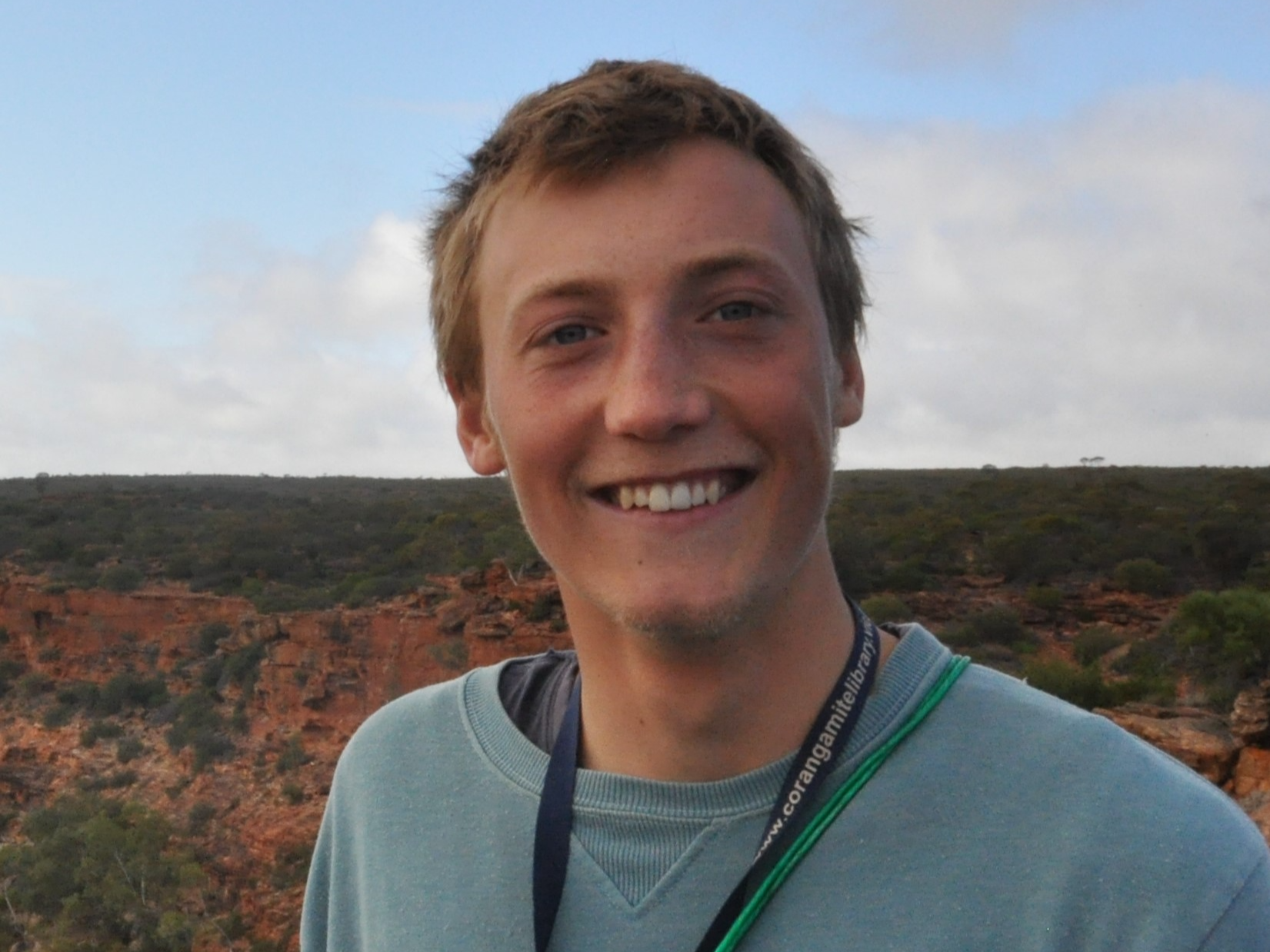
My name is Patrick Armstrong and I grew up in the small coastal town of Apollo Bay, along Victoria’s south-west coast. I was raised on a small-scale dairy in the hills around Apollo Bay, until my family moved into town when I was about five.
After graduating from the local school, I spent time travelling through South America and Europe, as well as within Australia. My trips throughout Australia have given me a great appreciation for the rural and less-travelled parts of the country, which influenced my decision to move to Perth to study a Bachelor of Engineering (Honours). Since then, I have become really passionate about the degree and its content and look forward to my next two years.
I am passionate about the fields of ecology and environmental science, systems thinking and design, and nutrition and wellbeing. Agriculture became a real passion when it occurred to me that these seemingly unrelated fields are all related to one another through food production. A broad interest in agriculture has since developed into a focus on regenerative and Indigenous farming practices, seaweed crops, biochar, biological water treatments, and the potential for carbon sequestration through agriculture.
When I finish my degree, I want to help implement and research sustainable solutions to land management issues, and do so in a way that secures positive social and ecological outcomes for those involved. I then want to use the skills and knowledge I gain working in the industry, to achieve my longer-term goal of running my own business and small-scale farm.
To have been awarded a Horizon Scholarship makes me feel really motivated to learn how to apply scientific and culturally informed engineering designs to food production systems. I am most looking forward to meeting people directly involved with agriculture, and to hear their on-farm experiences and see how this lines up with the theories and science that I have been educated in.
I am really excited to be sponsored by the Cooperative Research Centre for Northern Australia (CRCNA), and hope to gain experience working in remote areas in the northern part of Australia and learn more about the field of Indigenous land management.