

Real-time monitoring for Australia’s rice industry

Share



A project led by Ag Logic and supported by AgriFutures is transforming the way Tasmanian farmers manage their crops. By expanding a localised weather station network and integrating soil moisture monitoring probes, the project aimed to provide localised information to mitigate variability and boost agricultural resilience.
Ag Logic’s Head of Irrigation and Agricultural Monitoring Marek Matuszek said Tasmania’s diverse mesoclimates and soil types, coupled with patchy coverage from Bureau of Meteorology weather stations meant prior to the installation of the network growers lacked access to reliable, localised data to make informed farming decisions.
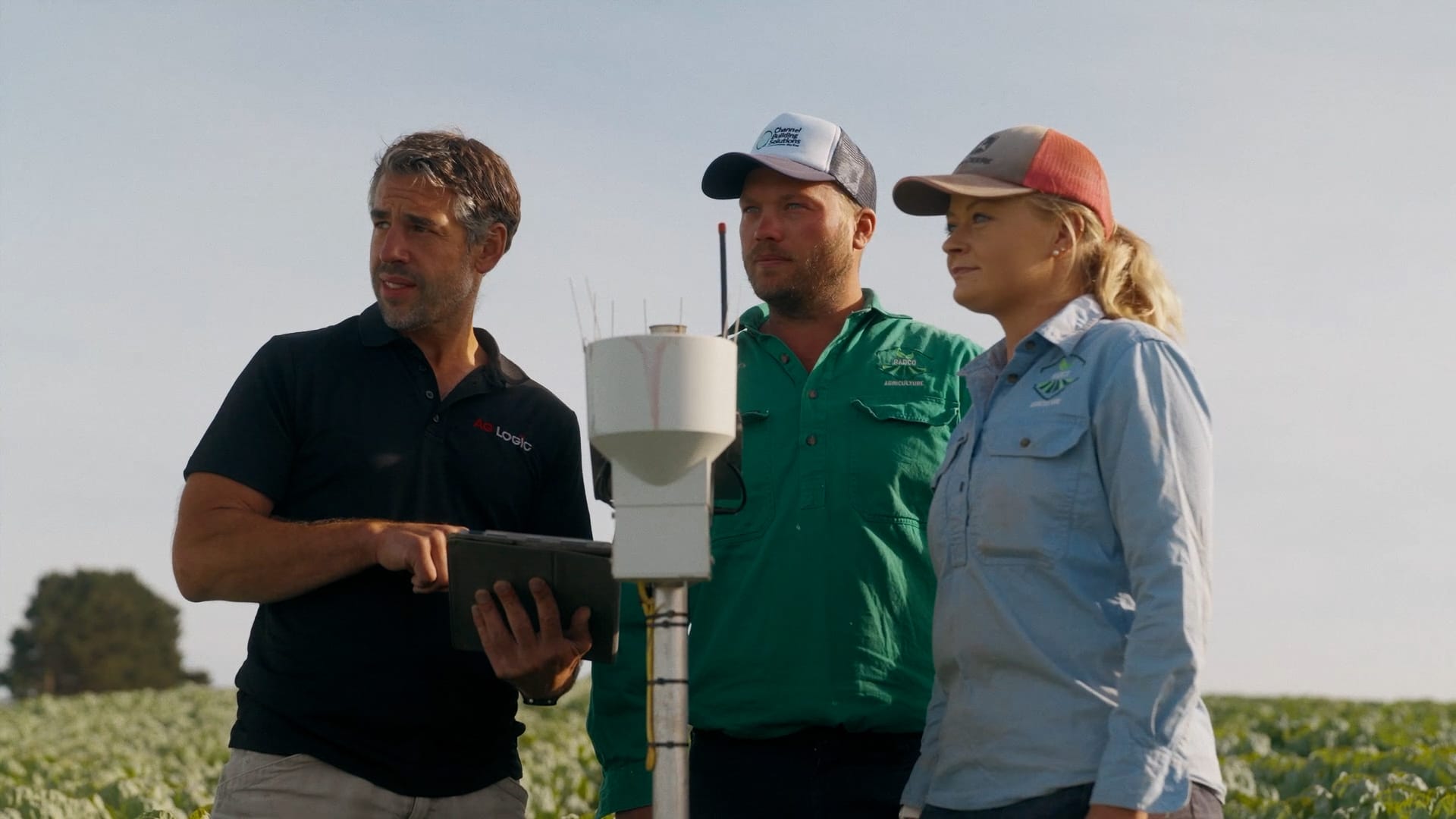
“One of the biggest challenges of farming in Tasmania is variability with climates and microclimates and how rainfall can vary over such a small landscape, along with soil variability within a paddock,” Marek said.
“The weather station network started initially with six weather stations funded through AgriFutures*. This was then leveraged for a greater project through our TAS Farm Innovation Hub and that expanded to more than 40 weather stations from King Island all the way down to southern Tasmania”.
By mid-2025, the network had expanded from six to 49 weather stations and 9 soil moisture probe sites with rain gauges, with ongoing growth supported by private investment from regional farmers.
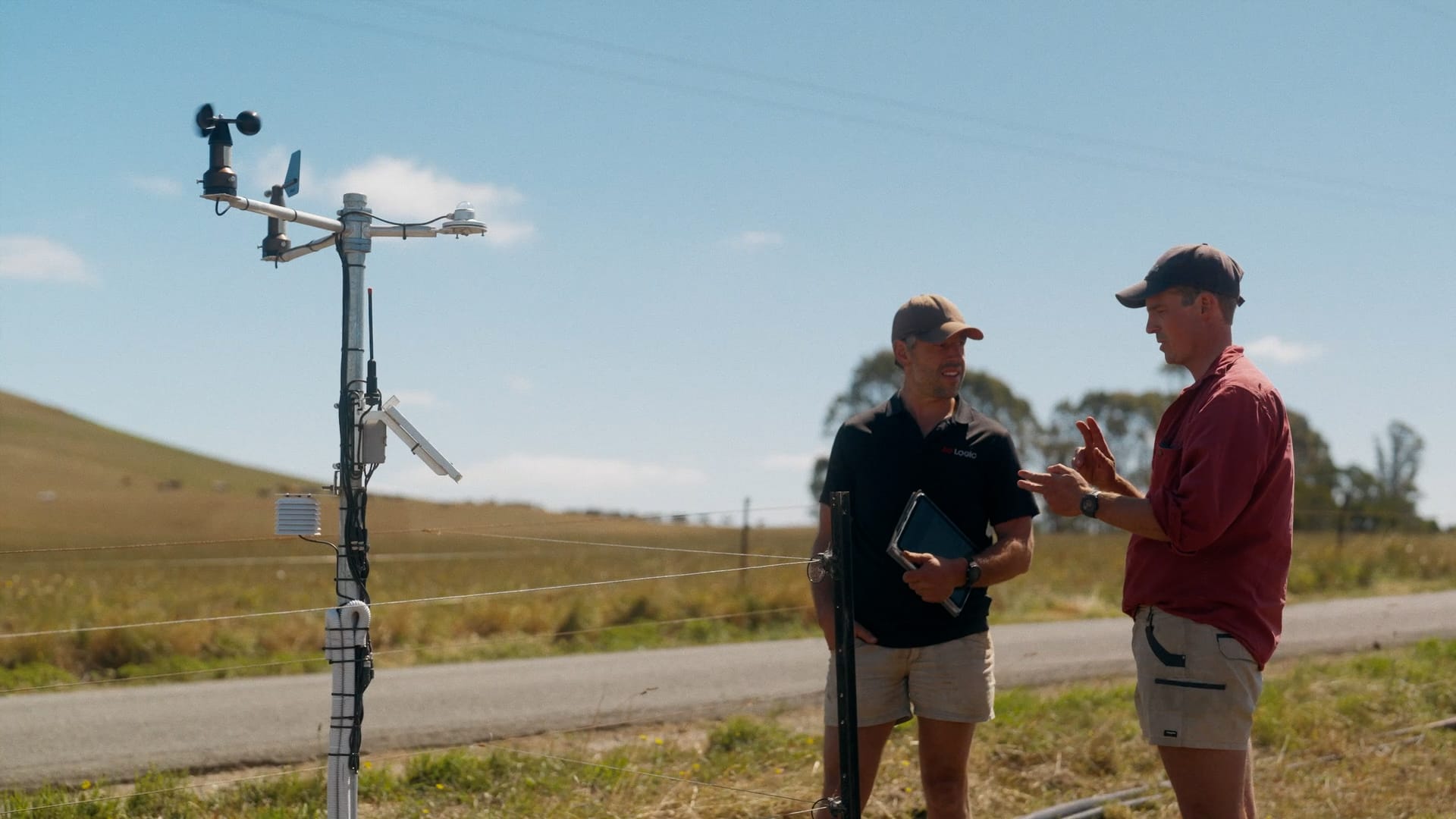
“We’ve positioned our weather station network to take into account all those microclimates, particularly along the northwest coast,” Marek added.
Caitlin Radford is a fifth generation farmer at Moriarty who embraced a range of agtech solutions in her mixed cropping and livestock business as a result of her involvement in the weather station project.
“It has helped immensely and I can’t imagine having our business now without our weather stations,” she said.
“It sparked our interest to further expand our knowledge and our database and we now have two further moisture probes that have the probe as well as a rain gauge out in the paddock.
“We’ve got variable rate on our pivots now, and then we’re looking to expand further into variable rate spreading and more things like that.”
South Riana Dairy farmer Brodie Hill said he jumped at the opportunity to have a weather station installed on his property, under the project.
“The weather station we have here measures a range of things – temperature, wind speed, rainfall, evapotranspiration, solar radiation, and soil moisture,” he said.
“I’m able to access that data through the Wildeye app so it’s very convenient on the phone, but I needed to know how to decipher it and how to really manage it.
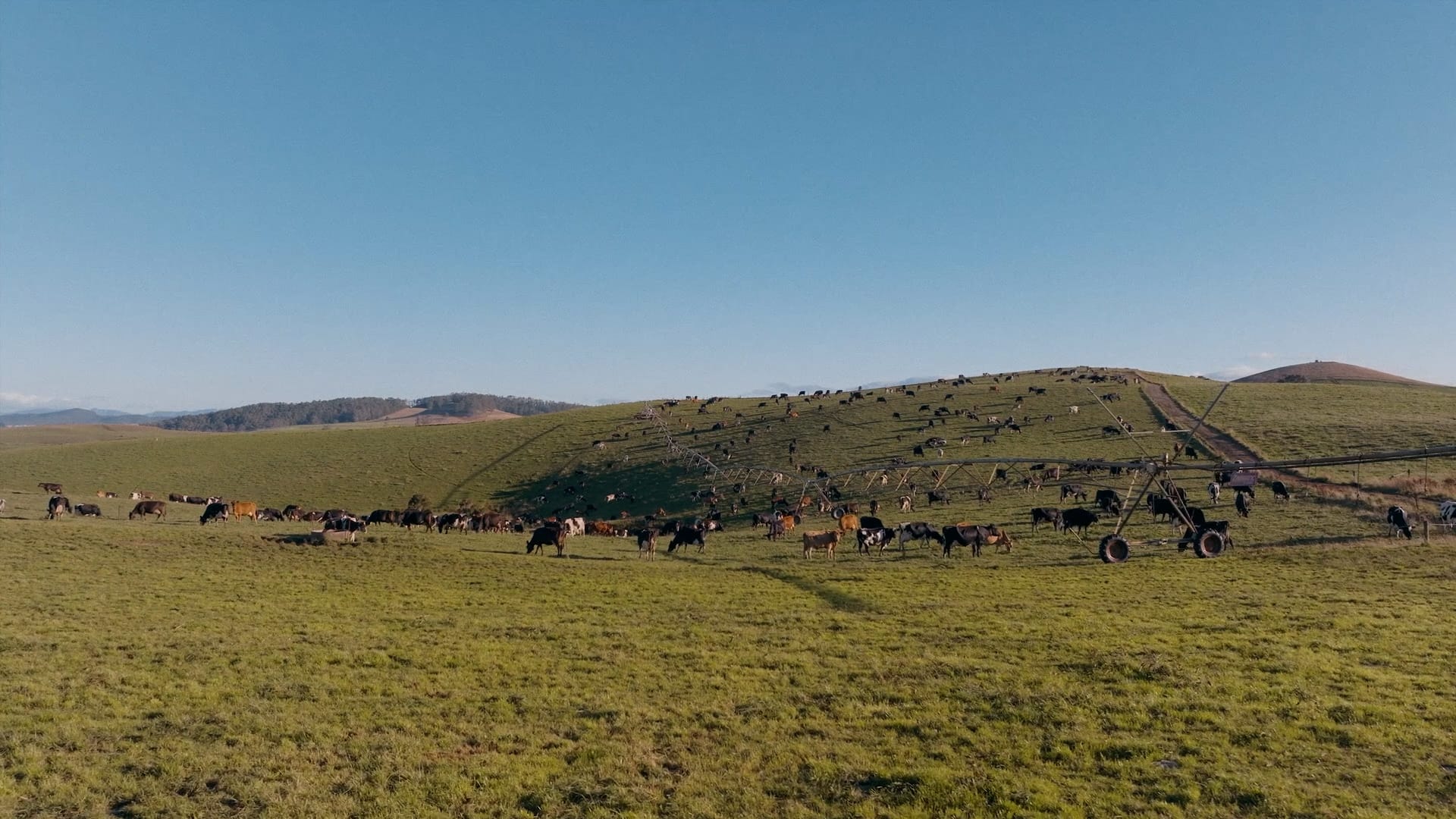
“Ag Logic was there to help guide me through and explain how I could best use that data.”
Brodie said irrigation is a key activity for him during summer and that in the past, he had struggled with when to start applying water after a rainfall event.
“From installing the probes, one of the biggest things I’ve found is that I was always irrigating too late,” he said.
“Now we are able to really dial in when we apply the water, so if we fully wet the profile we give the grass the best opportunity to maximise production.
“Once that probe was put in I could see how valuable it was, having some data that I could look at and then make my decisions.
“We’ve invested our own money to put the subsequent probes in.”
Marek said the project resulted in an increase in agtech adoption in the region by providing growers with a “soft launch” into the space. Ag Logic had identified that one of the biggest barriers to agritech adoption was growers’ lack of trust, after previous initiatives in the region which hadn’t included ongoing support, resulted in abandoned technology. Growers were also wary of making significant investments in hardware like weather stations, when the benefits hadn’t been demonstrated or proven locally.
With the support of AgriFutures, Ag Logic prioritised ongoing support and engaged closely with producers, while showcasing the tangible benefits of weather and soil data integration.
The team helped farmers prepare to use soil moisture probes with data-driven workshops and provided technical assistance every step of the way. They also hosted a series of field days at farming properties where weather stations and soil moisture probes had successfully been introduced.
Access to the weather station data was free of charge to growers for the life of the project and has since moved to a subscription model starting at $150 a year for one station. “They had access to the data so they could get comfortable with it, they could understand it and they could find out how they could use it within their own systems,” Marek said.
This project highlights how the adoption of agricultural monitoring technology can be sustained by providing ongoing engagement and targeted data interpretation support to growers.
If you’re a producer in Tasmania interested in accessing the network you can sign up here. For more information on installing a weather station or establishing a network visit aglogic.com.au.
RICE / 17.06.25  NATIONAL CHALLENGES AND OPPORTUNITIES / 17.06.25
  CORPORATE / 17.06.25
EXPORT FODDER / 17.06.25
CORPORATE / 17.06.25
EXPORT FODDER / 17.06.25
Real-time monitoring for Australia’s rice industry
Modern farming is outgrowing Australia’s tax system, new AgriFutures research shows
Adelaide named host city for evokeAG. 2027
AgriFutures welcomes two new members to Export Fodder Advisory Panel