

Finding her path in agriculture: Ellie Buchanan’s Horizon Scholarship journey

Share



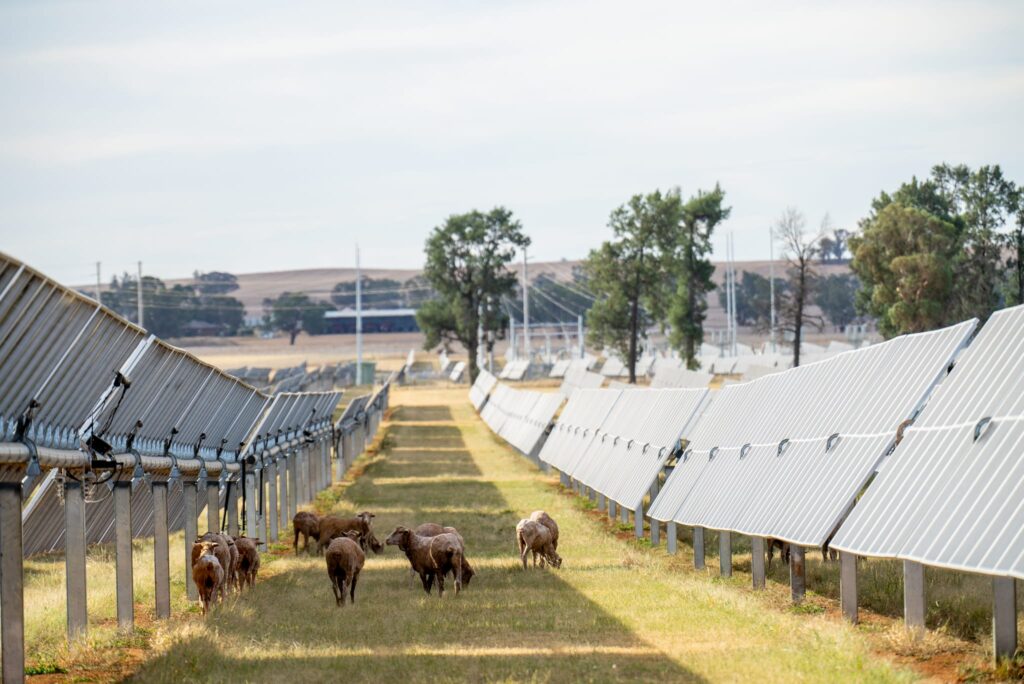
The Agriculture, Fisheries and Forestry Energy Transition Roadmap (2026–2036), released by AgriFutures Australia, provides a system-wide view of how agriculture, fisheries and forestry can adapt to changing energy markets and technologies while maintaining productivity.
AgriFutures Australia Managing Director, Brianna Casey AM, said energy has become an increasingly important factor shaping how farm businesses operate and plan.
“The impact of the ongoing conflict in the Middle East on the availability and affordability of key agricultural inputs is only the latest example of energy costs becoming harder to manage, and supply becoming less certain,” Ms Casey said.
“Energy is no longer just an input cost, it is shaping decisions about investment, diversification, expansion and how primary production businesses stay productive into the future.
“Energy is also playing a growing role in how food and fibre are produced, the cost of production, and the strengths of supply chains.”
The Roadmap looks beyond individual technologies to broader systems that underpin on-farm decision making, including infrastructure, policy and tax settings.
Drawing on feedback from across industry, energy, government and the supply chain, it identifies where the energy transition is already progressing and where key barriers remain.
The findings point to a mixed energy future. Electrification is expected to expand in fixed operations such as irrigation, sheds and processing, while a range of liquid fuels, including emerging alternatives such as biofuels, are likely to remain important for heavy machinery, transport, forestry and fishing operations.
The research also shows that many of the enabling conditions required for large-scale change are not yet in place. Constraints in regional infrastructure, grid capacity, supply chains, policy settings and workforce capability mean producers are currently managing much of the complexity associated with the transition.
“The Roadmap highlights that this transition will occur at different speeds across the sector, depending on the availability of technology, infrastructure and viable energy options,” Ms Casey said.
“It also reinforces the importance of coordinated action across industry, government and the energy sector to support practical and sustainable change.”
The Roadmap builds on AgriFutures Australia’s broader research program examining how changes across energy markets and regulation are affecting primary production businesses, including forthcoming work on how tax settings interact with emerging activities and income streams.
It is designed to support coordination across the sector, complementing existing industry plans and aligning with Australia’s national Net Zero Plan and the Agriculture and Land Sector Plan.
AgriFutures Australia has also identified renewable fuels, including biofuels, as a priority area for further work, particularly for parts of the sector where electrification remains challenging.
Future research will examine barriers to producing biofuels at scale in Australia, including regulation, transport, feedstocks and investment.
The Agriculture, Fisheries and Forestry Energy Transition Roadmap (2026–2036) is available here
Register for our upcoming webinar on the report
Media enquiries:
Jamie Jones
Manager, Corporate Affairs and Communications
WORKFORCE AND LEADERSHIP / 30.04.26
WORKFORCE AND LEADERSHIP / 30.04.26  CORPORATE / 30.04.26
WORKFORCE AND LEADERSHIP / 30.04.26
CORPORATE / 30.04.26
WORKFORCE AND LEADERSHIP / 30.04.26
Finding her path in agriculture: Ellie Buchanan’s Horizon Scholarship journey
From Acceleration Grant Recipient to Rural Women’s Award Finalist
AgriFutures Australia welcomes new Board of Directors
You can’t be what you can’t see: pathways into agriculture