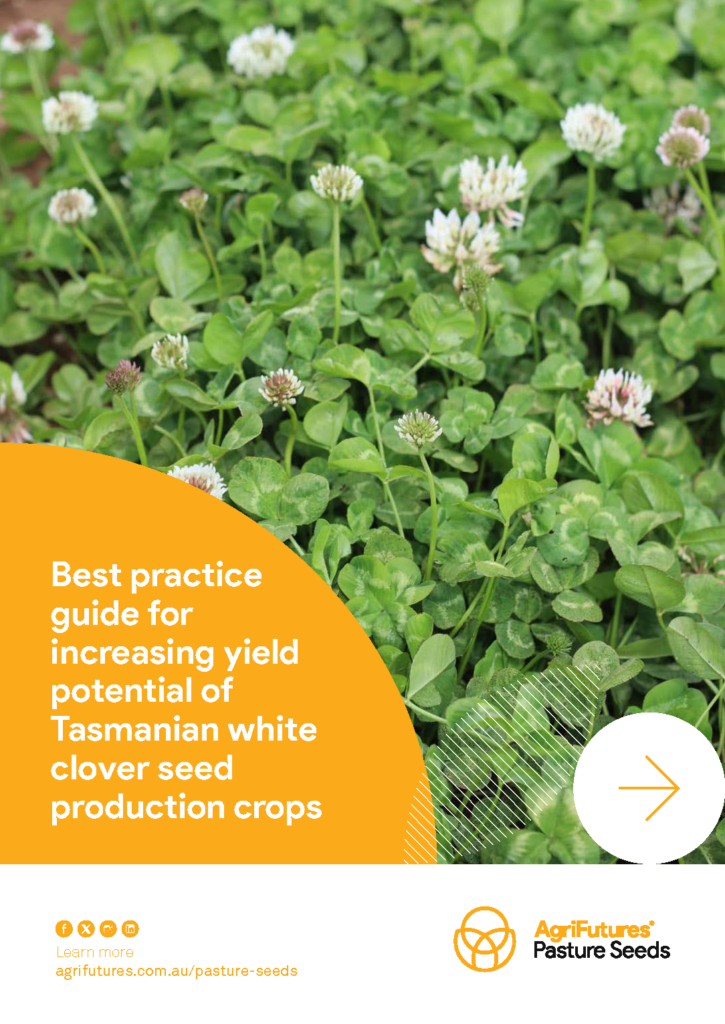
White clover seed underpins dairy pastures, nitrogen fixation, organic farming and honey production. Tasmania has grown it commercially for over 60 years. Today the industry delivers more than $3.5 million in farm gate value each year.
Demand is rising in Australia and overseas and growers have a clear opportunity to expand production across Tasmania and southern Australia. Tasmania’s irrigation schemes and low pest pressure support reliable seed crops. However, white clover seed production remains complex. Yields have stagnated for two decades. As a result, many growers question profitability against other commodities.
Until now, industry lacked a shared, practical reference on crop management. Consequently, growers developed varied approaches across regions and businesses. This report fills that gap. It summarises current Tasmanian agronomy practices and explains key decision points through the season. In addition, it draws lessons from international research.
It focuses strongly on New Zealand, because climates and farming systems align closely. Moreover, New Zealand leads white clover seed research and commercial practice. Use this guide alongside, Increasing yield potential of Tasmanian white clover seed production crops. Together, they link best-practice management with local trial results and economics.