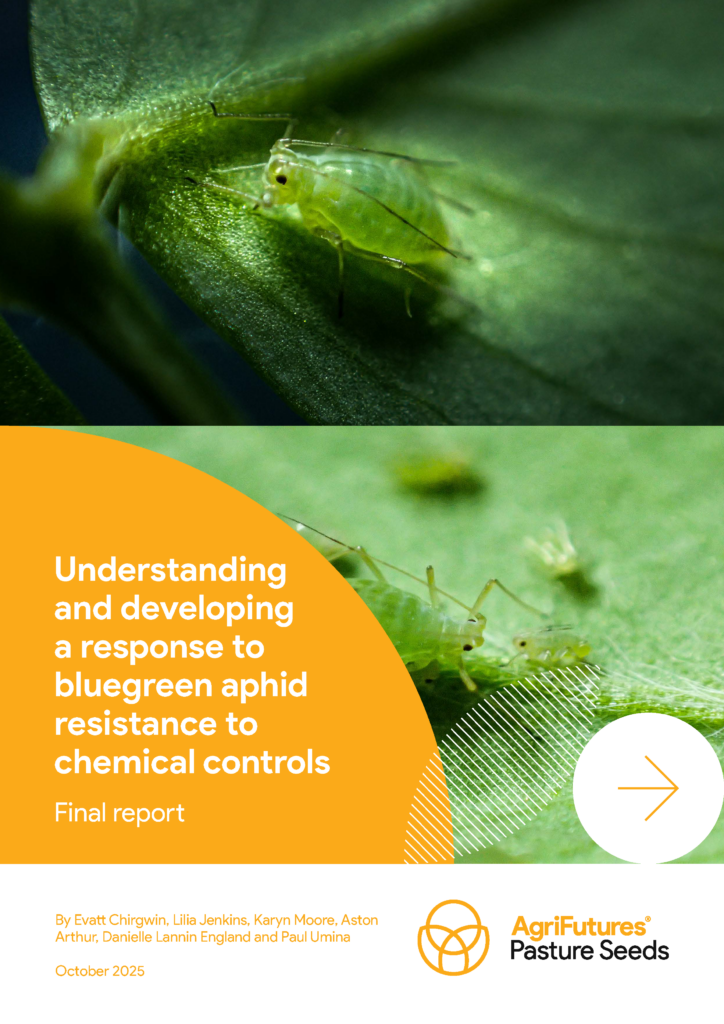
Bluegreen aphid (BGA) threatens pastures and legume seed crops across southern Australia. Growers have long controlled BGA with insecticides, but in 2021 researchers found the world’s first BGA resistance to organophosphates, carbamates and synthetic pyrethroids in SA and NSW.
This project responded by mapping resistance, measuring its strength and turning findings into practical management. A surveillance program found 21 additional resistant populations and confirmed spread into the Eyre Peninsula, Tamworth and many Victorian sites. Resistance happened most often in lucerne pastures and lucerne seed crops in south‑eastern SA – almost every sampled population showed resistance.
The team also recorded resistant BGA on lentils, sub‑clover and vetch for the first time. Tests showed resistance levels vary by chemistry. Carbamates were usually less affected, so these products may still work when growers spray under optimal temperatures.
In parallel, the project established baseline biocontrol knowledge. Surveys showed the parasitoid wasp Aphidius ervi attacks BGA across all regions and crops, and lab work showed it can suppress other key aphids. Sticky traps detected ladybirds, lacewings, hoverflies and rove beetles as likely predators.
The report ends with monitoring, chemical, cultural and biocontrol recommendations and future research priorities. It supports growers, advisers and seed companies.