
Report: The impact of climate on sorghum utilisation in poultry diets
Climate change feed grains research examines wheat, barley, maize and sorghum for poultry diets and practical ways to protect quality and supply.
 CHICKEN MEAT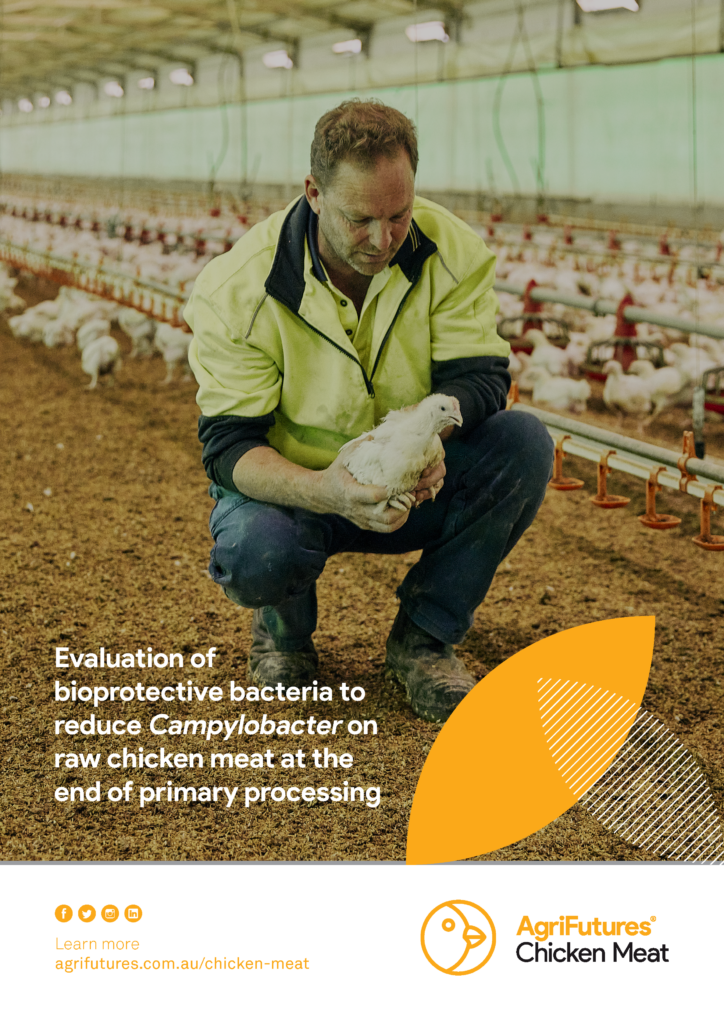
4 pages
Published: 22 May 2026
Publication Code: 25-047
Author(s): Templeton, J.



Download report PDF
DownloadThis project investigates how lactic acid bacteria (LAB) can reduce Campylobacter on raw chicken meat. Campylobacter remains a major food safety challenge for the Australian chicken meat industry and a leading cause of foodborne gastroenteritis nationwide.
Because Campylobacter is frequently linked to chicken meat, the industry continues to seek stronger control measures. These measures apply across both production and processing systems and aim to reduce risks to consumers.
To support this work, researchers developed a large collection of LAB isolates from raw chicken meat and fresh produce. They screened more than 1,100 isolates for anti-Campylobacter activity. The team then identified the most promising strains and confirmed their safety.
Next, researchers tested selected LAB strains in challenge trials on raw chicken meat. Five isolates also underwent further testing to assess their impact on shelf life and sensory attributes. These attributes included colour, odour and surface appearance.
The results showed that selected LAB strains reduced Campylobacter levels by up to 99%. This reduction occurred mainly through acid production and lower pH. Other antimicrobial mechanisms also played a role. Importantly, genomic analysis found no safety concerns in the most effective strains.
Finally, sensory testing showed that some LAB treatments maintained or improved meat quality beyond expected use-by dates. Overall, the findings show that LAB-based interventions can enhance food safety and support shelf-life maintenance. They also offer a practical, natural option for the poultry industry.
Climate change feed grains research examines wheat, barley, maize and sorghum for poultry diets and practical ways to protect quality and supply.
This research examines how climate stress and feed innovations affect grain quality and broiler performance. It highlights how CO2, heat and drought shape wheat, barley,...
This report examines the use of lactic acid bacteria as a natural bioprotective approach to reduce Campylobacter on raw chicken meat. Screening over 1,100 isolates,...
Explore chicken meat emission pathways to 2050, with costs, feasibility and offsets across net zero, SBTi and floating targets.
The principal aim of these guidelines is to ensure that the chicken meat industry’s ongoing economic growth upholds the principles of environmentally sustainable and socially...
The principal aim of these guidelines is to ensure that the chicken meat industry’s ongoing economic growth upholds the principles of environmentally sustainable and socially...
The findings of the Economic contribution of Australia’s chicken meat industry report highlight the importance of the chicken meat industry in Australia’s agricultural landscape
The findings of the Economic contribution of Australia’s chicken meat industry report highlight the importance of the chicken meat industry in Australia’s agricultural landscape.