
Report: The impact of climate on sorghum utilisation in poultry diets
Climate change feed grains research examines wheat, barley, maize and sorghum for poultry diets and practical ways to protect quality and supply.
 CHICKEN MEAT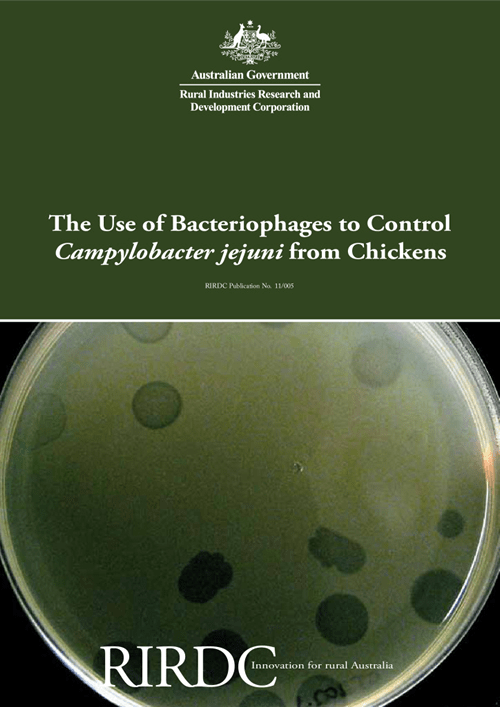
45 pages
Published: 22 Feb 2011
Author(s): Barton, M.D. , Heuzenroeder, M. W., Owens, J.



Download report PDF
DownloadPurchase a hard copy - AUD $45.00
Use of bacteriophage and phage products to control campylobacter in chicken
1 March 2007 – 30 June 2010
Worldwide, over 90 percent of reported bacterial food-borne illness in humans can be attributed to either Campylobacter or Salmonella species. Of these two organisms, Campylobacter is the most common bacterial cause of diarrhoeal disease in humans.
One proposed adjunctive control measure for Campylobacter is the use of bacteriophages. Bacteriophages are viruses that are able to infect and kill bacterial cells and they will only multiply when susceptible bacteria are present. The emergence of antibiotic resistant bacteria has, in recent times, renewed Western research interest in the possibilities of using bacteriophages to control bacteria, such as Campylobacter. This RIRDC study investigated Campylobacter jejuni and its associated wild type bacteriophages.
Climate change feed grains research examines wheat, barley, maize and sorghum for poultry diets and practical ways to protect quality and supply.
This research examines how climate stress and feed innovations affect grain quality and broiler performance. It highlights how CO2, heat and drought shape wheat, barley,...
This report examines the use of lactic acid bacteria as a natural bioprotective approach to reduce Campylobacter on raw chicken meat. Screening over 1,100 isolates,...
Explore chicken meat emission pathways to 2050, with costs, feasibility and offsets across net zero, SBTi and floating targets.
The principal aim of these guidelines is to ensure that the chicken meat industry’s ongoing economic growth upholds the principles of environmentally sustainable and socially...
The principal aim of these guidelines is to ensure that the chicken meat industry’s ongoing economic growth upholds the principles of environmentally sustainable and socially...
The findings of the Economic contribution of Australia’s chicken meat industry report highlight the importance of the chicken meat industry in Australia’s agricultural landscape
The findings of the Economic contribution of Australia’s chicken meat industry report highlight the importance of the chicken meat industry in Australia’s agricultural landscape.