
Australian Pomegranate Industry Strategic Plan 2021-2026
The Australian Pomegranate Industry Strategic Plan (the Plan) provides a roadmap to guide activity and investment in the pomegranate industry between 2021 and 2026. The...
92 pages
Published: 5 Jun 2023
Publication Code: 23-081
Author(s): Kristen Stirling, Dimi Kyriakou
ISBN: 978-1-76053-378-6



Download report PDF
DownloadPurchase a hard copy - AUD $60
Best practice manual for growing pomegranates in Australia
27 March 2022 – 8 June 2023
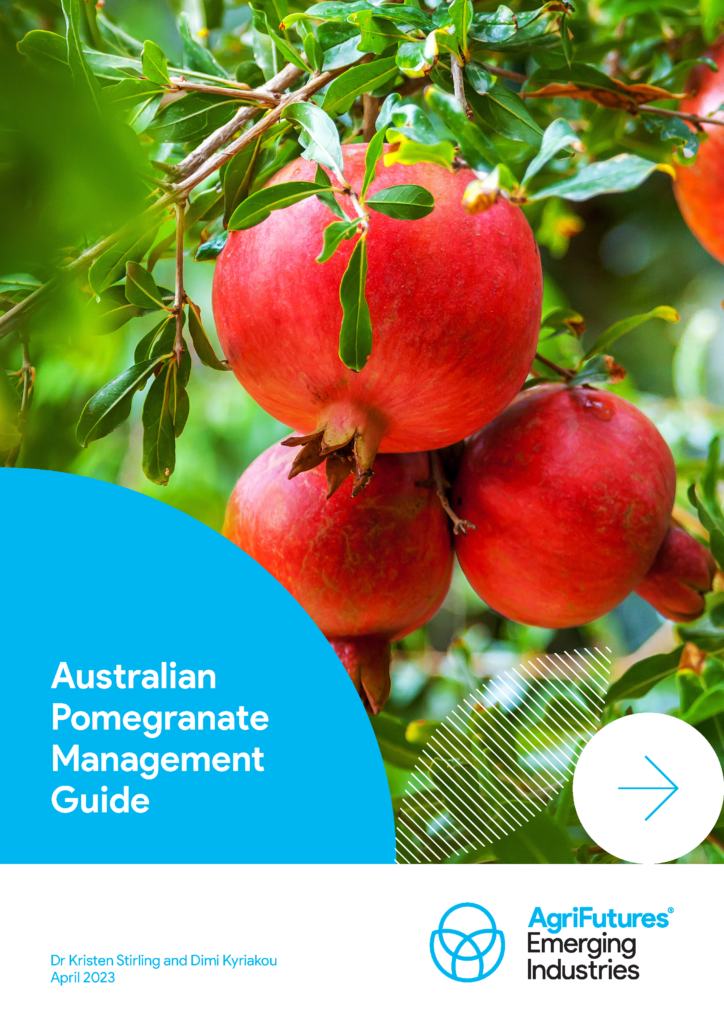
Pomegranate in Australia is a growing, high-potential horticulture industry. Commercial pomegranate production began in the early 2000s and by 2021 the industry’s estimated gross value of production was $10.4 million. Australian pomegranate markets include fresh fruit, juices, ready-to-eat and frozen arils, and nutraceuticals, with counter-seasonal opportunities in the northern hemisphere. This guide shows how to grow pomegranate with practical, Australia-specific best practice, from orchard planning through to harvest and quality assurance.
A practical, Australia-specific guide for growing pomegranate in Australia, designed for new and established growers. It tackles key management challenges such as water and soil efficiency, pest pressure and limited chemical options, while supporting profitable pomegranate production and consistent fruit quality.
More about pomegranate production
Pomegranate in Australia is emerging but high-potential. Commercial production began in the early 2000s and the industry’s estimated 2021 gross value of production was $10.4 million. Demand is growing across fresh fruit, juices and arils (ready-to-eat and frozen) and nutraceuticals, with scope to supply counter-seasonal product to northern hemisphere markets.
The pomegranate season in Australia is short, with a limited fresh supply window extending from late January to May (often exhausted by June). Demand is also supported by pomegranate’s health profile, including antioxidants that underpin interest in fruit and derived products.
As consumer demand grows for fresh fruit and value-added formats, the opportunity for pomegranate production will increasingly depend on consistent quality, efficient irrigation and nutrition, strong pest/biosecurity practice and well-timed harvest and storage. The Guide brings these elements together in one practical resource, with best-practice recommendations and checklists to support confident decision-making on farm.
Download the full report to access the complete guidance, supporting references and industry context.

The Australian Pomegranate Industry Strategic Plan (the Plan) provides a roadmap to guide activity and investment in the pomegranate industry between 2021 and 2026. The...