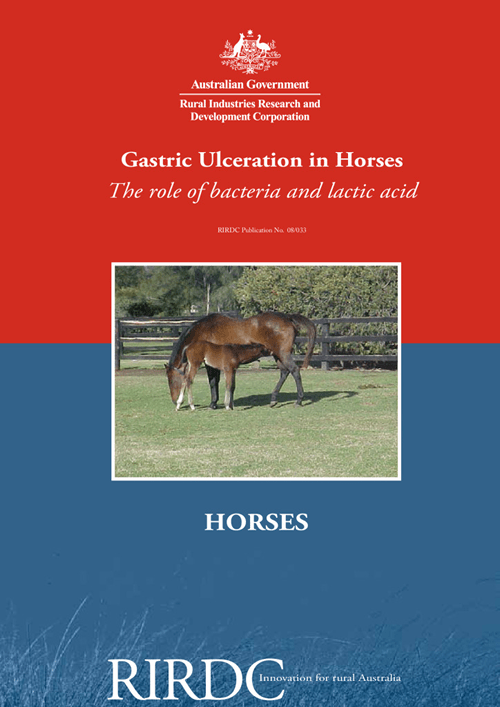
Gastric ulceration is widespread and a very common problem in horses in training. When it occurs in horses, gastric ulceration is a potential insidious cause of poor athletic performance or, when severe, an animal welfare concern. It is widely accepted that this is a problem resulting from feeding and management practices, especially in racehorses where the prevalence is extremely high. Racehorses are fed large meals of grain rich diets and with extended periods of fasting between meals. This combined with increased gastric acid production during exercise, reduction in saliva production due to low fibre content of the diet, and indoor confinement that likely contributes to the development of stomach ulcers.