
Fact sheet: Weed management
Oat hay weed control fact sheet outlining identification, export standards and practical management options to prevent contamination and protect hay quality.
 EXPORT FODDER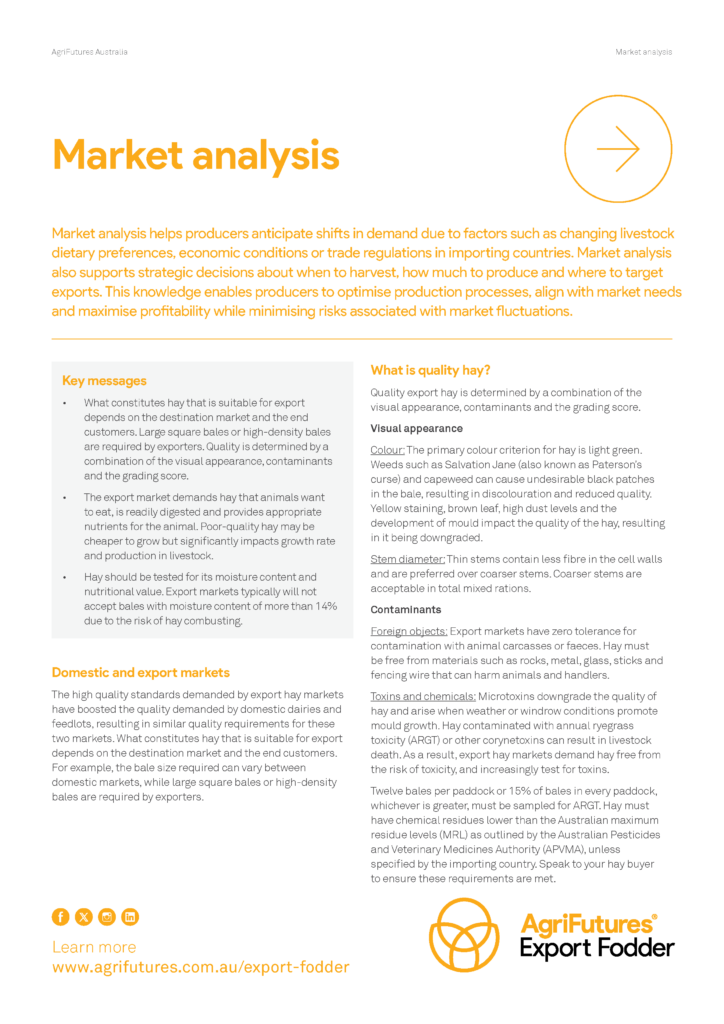
4 pages
Published: 2 Jul 2026



Download report PDF
DownloadThis fact sheet explains how market analysis helps oat hay producers make better decisions and stay competitive in export markets.
Market conditions can change due to factors such as livestock feed needs, economic trends and trade rules in importing countries. By understanding these changes, producers can decide when to harvest, how much hay to produce and which markets to target.
Export hay requirements vary depending on the destination and customer needs. For example, most exporters require large square or high-density bales. Hay quality is judged on appearance, cleanliness and grading scores. Hay must look good, be free from contaminants and meet set standards.
Good-quality hay is important for livestock performance. Animals need hay that is easy to eat, simple to digest and provides the right nutrients. While lower-quality hay may cost less to produce, it can reduce animal growth and productivity.
Testing is also a key step. Hay should be checked for moisture and nutritional value before export. Most markets will not accept hay with more than 14% moisture, as this increases the risk of spoilage or combustion.
By using market insights and meeting quality standards, producers can reduce risk, improve returns and protect market access.
Oat hay weed control fact sheet outlining identification, export standards and practical management options to prevent contamination and protect hay quality.
This fact sheet explains how to store and transport hay to maintain quality and meet export standards. It outlines risks from moisture, sunlight and poor...
Oat crop diseases guide covering identification, risks and control methods to protect hay quality and meet export standards.
Manage oat crop pests to protect hay quality and meet export standards. Learn key pests, control methods and compliance requirements.
Oaten hay making guide covering cutting timing, curing and baling methods to maximise quality and yield. Learn how to improve outcomes.
Oaten hay market analysis explains demand, quality standards, and export requirements to maximise returns and reduce risk.
Australia’s export fodder industry relies on maintaining high quality and meeting strict international regulations, with mycotoxins posing a growing risk to market access. This research...
Zearalenone is the primary mycotoxin risk in Australian export fodder, driven by Fusarium species linked to cereal crown rot. Although exports are not yet widely...