
Fact sheet: Weed management
Oat hay weed control fact sheet outlining identification, export standards and practical management options to prevent contamination and protect hay quality.
 EXPORT FODDER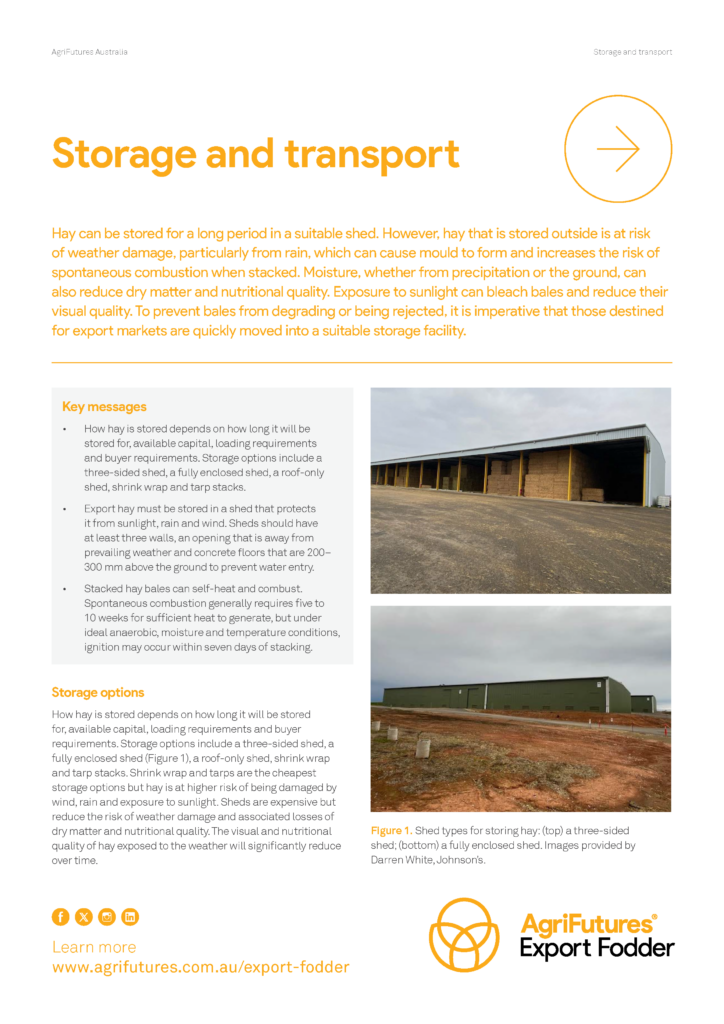
3 pages
Published: 2 Jul 2026



Download report PDF
DownloadThis fact sheet outlines best practices for storing and transporting hay to maintain quality and meet export standards.
Hay can be stored for long periods in suitable sheds, but outdoor storage increases the risk of weather damage. Rain can cause mould growth and raise the risk of spontaneous combustion when bales are stacked.
Moisture from rain or the ground can also reduce dry matter and lower nutritional value, while sunlight can bleach hay and reduce its visual quality.
Choosing the right storage method depends on how long hay will be stored, available infrastructure, and buyer requirements. Options include fully enclosed sheds, three-sided sheds, roof-only structures, shrink wrap and tarp-covered stacks.
For export hay, proper storage is essential. Sheds should protect bales from rain, wind and sunlight, and include at least three walls, raised concrete floors and openings positioned away from prevailing weather.
The fact sheet also highlights safety considerations. Stacked hay can self-heat and may combust under certain conditions. While this process often takes several weeks, it can occur sooner if moisture and temperature levels are high.
By using appropriate storage systems and monitoring conditions, producers can protect hay quality, reduce losses and meet export market requirements.
Oat hay weed control fact sheet outlining identification, export standards and practical management options to prevent contamination and protect hay quality.
This fact sheet explains how to store and transport hay to maintain quality and meet export standards. It outlines risks from moisture, sunlight and poor...
Oat crop diseases guide covering identification, risks and control methods to protect hay quality and meet export standards.
Manage oat crop pests to protect hay quality and meet export standards. Learn key pests, control methods and compliance requirements.
Oaten hay making guide covering cutting timing, curing and baling methods to maximise quality and yield. Learn how to improve outcomes.
Oaten hay market analysis explains demand, quality standards, and export requirements to maximise returns and reduce risk.
Australia’s export fodder industry relies on maintaining high quality and meeting strict international regulations, with mycotoxins posing a growing risk to market access. This research...
Zearalenone is the primary mycotoxin risk in Australian export fodder, driven by Fusarium species linked to cereal crown rot. Although exports are not yet widely...